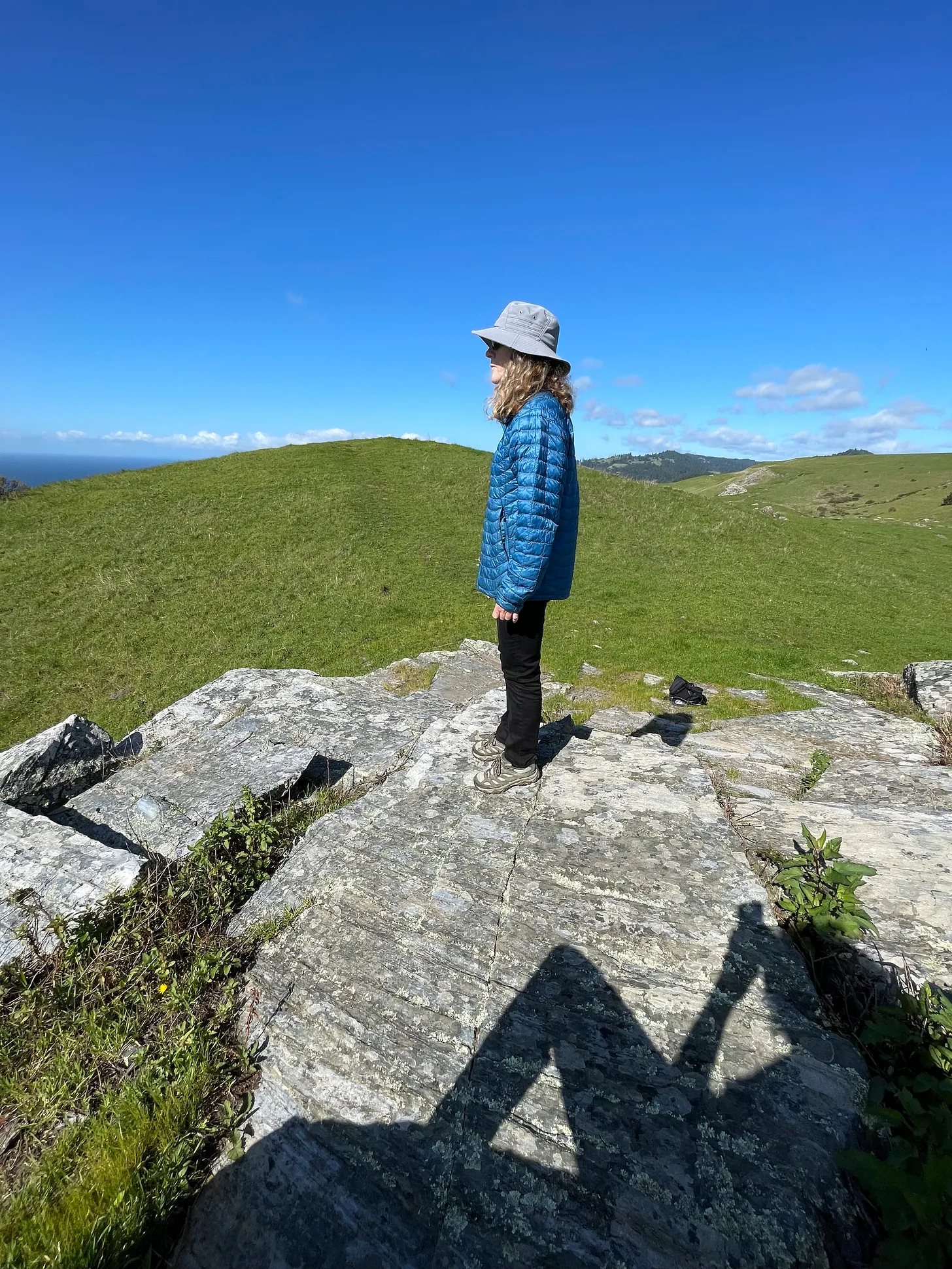
We spent my 70th birthday on the Sonoma Coast, my Lisa and I. Seventy is a big number in a human life, heralding a change. No longer young, nor middle aged; entering elder hood, with its shift in horizon.
I was born on the east coast, and came west at twenty. I came alone, on a Greyhound bus, rolling through the woods and gentle hills of the east, across the endless verdant flatlands, up and over the Rockies, and into the drying, massive West. When I first saw the Pacific Ocean, I felt the freedom of leaving what had held me down. Looking west from the country’s edge, I felt keen possibility, everything ahead of me; finally able to move into a future of my own making. I was leaving something, then, joyfully, triumphantly.
On my seventieth birthday, standing on this same edge, with my back to my youth, and to my middle age, I am much calmer. Fifty years have passed from when I first saw this ocean. I won’t have another fifty, that’s for sure. There is far less time ahead, and while I imagined many different lives when I was just starting out, I could not have imagined this one, the one I have made, for which I am so grateful, in which I am the happiest I have ever been.
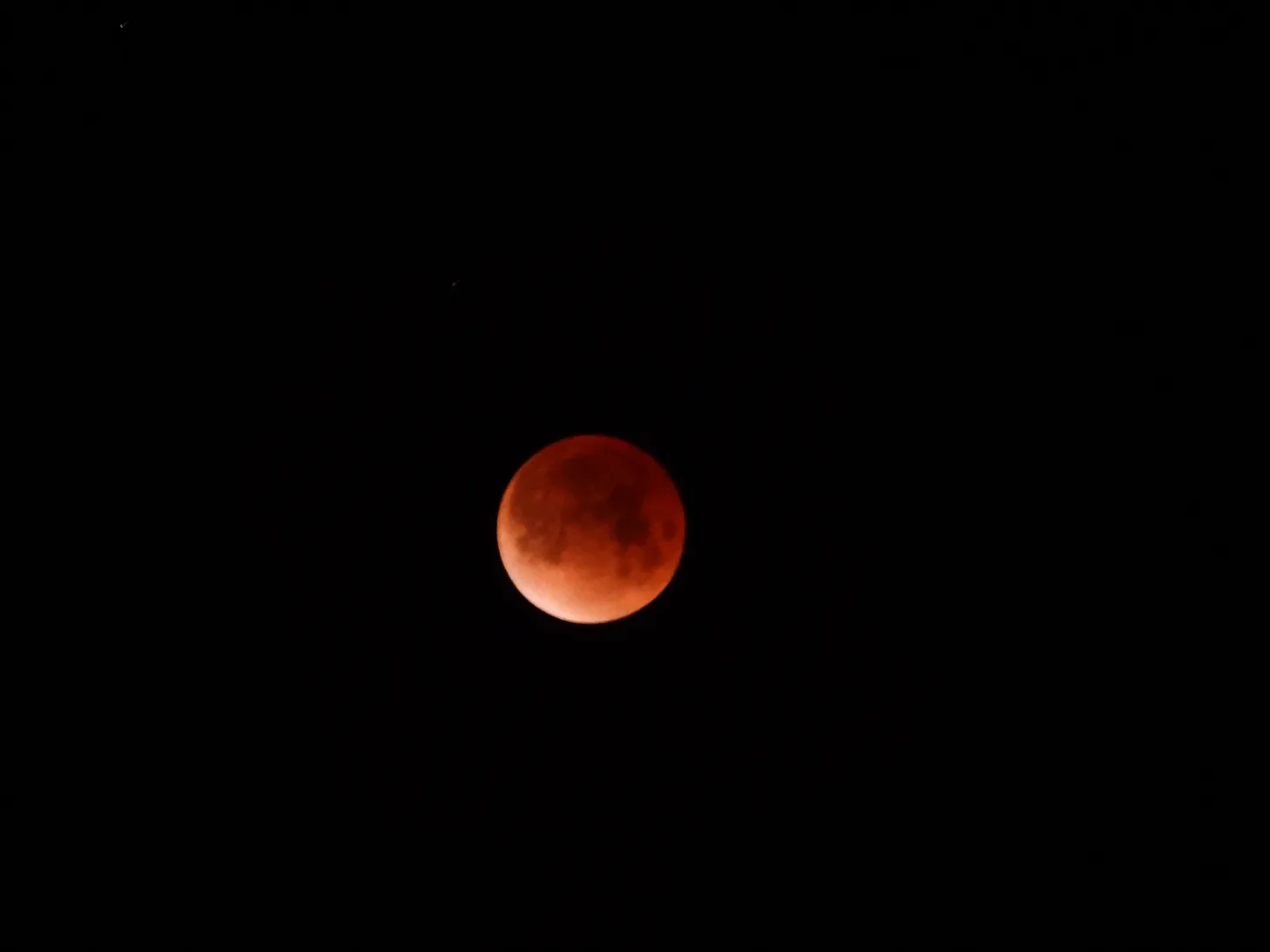
On my birthday, we hiked along the coast, up and down the gentle rises, across meadows strewn with wildflowers, briefly glorious. Sun cups, rosy sand crocus, footprints of spring, Douglas iris. We crossed into a gully where the river ran into the ocean. We climbed back out into the slanted afternoon light, where Petticoat Mottlegill mushrooms glowed as if made of bronze. That night, I woke before dawn to watch the moon disappear into the earth’s shadow, moving from bright full to gibbous, to crescent, to a glowing-red blood moon.
I’ve seen death. Many deaths. I know it is hard work. I know how the living body shuts down, and how, in an instant, it is made of absence. I have felt the whoosh passing my ears, my head and chest, and then a kind of lingering pressure, of varying lengths each time.
I’ve felt the elation that comes in the limens between life and death, and the thudding stillness afterwards.
And I’ve seen a blood moon at the end of night, waning into a gorgeous sienna globe.
The day after my birthday, Lisa and I hiked into the Sonoma headlands. We gained a thousand feet in elevation and from the peak could see the tip of Point Reyes, a distant shadow, jutting out from the jagged coast. It was an arduous trek, a rough trail, and steep. I was proud that I could even do it, still. Lisa, who is nine years younger, had no problem with the hike. She has hiked, biked, and bouldered this coast her whole life. She comes from an athletic family. Her brothers, who are my age and older, can still manage triathlons. But I was not raised to this level of outdoors adventure. I am still thrilled that it exists, that I can do it at all. No one in my family was sweating under a backpack at a thousand feet elevation on a late winter morning, ever. Much less at seventy.
So there’s that, my pride. Forgive me a moment of crowing. If you saw where I came from, you’d understand. But let’s leave it at this:
A few days after my birthday, my daughter accompanied me on Trail Patrol in Pt. Reyes. A day of wild flowers and otters, and enjoying one another’s company. She told me that she had been talking with her friends about hope at this time and they were in agreement that there was little to be hopeful about, that their sense of loss and defeat and despair was greater than what seemed to them like a cover-over made of good but weak intention. As I listened, I thought about the leather pouch I carry on our hikes. It hangs from my belt loop, and I use it to collect specimens to later draw and study. It was hanging from my belt on the first Earth Day in April 1970. I was in eighth grade. Later that year, the Environmental Protection Act passed, which put stewardship of the natural world on the political agenda. My little pouch is older than the EPA, a cause dear to my daughter, and an idea settled into our collective conscious by the time she was born. It was not, however, dominant during my childhood. To my daughter, it seems that fundamental rights are being taken away. To my generation, these ideas took hold as we came of age, during a long, powerful cultural shift ushered in by progressive thinkers and tireless activists. In 1970, I thought I was the only gay woman in the world, or so it seemed. When I came out in high school, homosexuality was illegal. It was a diagnosable mental illness in the Diagnostic and Statistical Manual used by clinicians. Gay kids could be involuntarily hospitalized. I had to sidestep my own family’s rough treatment and treacherous intention, one reason I was on that Greyhound bus.
My grandmother was born in 1900. She needed a business loan in the 1920’s to provide for her family. Banks would not lend to women at that time. She convinced a male employee to secure the loan and turn it over to her. By the time I was starting out in private practice, in my thirties, my grandmother in her nineties schooled me in my need to start a SEP IRA. She had become experienced with banking, living as a single working woman, savvy in the world of personal finance.
I watched the world change in my lifetime. The erosion of good things sits side by side with their being won. I know they can be won again.
I am full of hope. Not hope for a specific outcome. My hope is to keep going, just keep going. One step after another. Assess and re-assess, pivot and realign, and take in new information. Stand to be corrected. Tolerate correction, and learn from it. Then keep going. Rebuild, move on, let go, revise. But keep going. Life is about development. Even in senescence, there is development — the body weakens, the spirit not so much. Wisdom is accumulative. As long as we are alive, there is room for wisdom. On my seventieth birthday, standing with my back to the country’s blunted edge, I feel hope. Hope in living, hope in dying, and a blood moon at the end of night.